



Oral language development from birth to age 3 provides the foundation for communication, literacy, and long-term academic success. A robust body of research consistently demonstrates that early interactions, caregiver engagement, and rich language exposure are essential to fostering these critical early skills.
Milestones From Birth to Age 3
Oral language emerges long before children speak their first words. During the first three months, infants respond to familiar voices, coo, cry to express needs, and smile during face-to-face interaction—early social engagement that is vital to later development. Between 6 and 12 months, babies typically begin to babble, recognize their name, and develop a receptive vocabulary tied to familiar people, objects, and routines. In fact, young children often understand far more than they can express (Gosh, 2015; Mayo Clinic, 2025).
From 12 to 36 months, toddlers experience a remarkable period of vocabulary growth. They begin combining words into simple phrases such as “more milk” or “go bye-bye,” and by age 3, many can participate in short, meaningful conversations (Mayo Clinic, 2025).
Why Early Interaction Matters
Language learning happens through connection. Frequent, responsive, and engaging interactions with adults help infants and toddlers master sounds, words, and eventually sentence structure. The natural exaggerated speech many adults use—known as parentese—draws infants’ attention and supports early word learning.
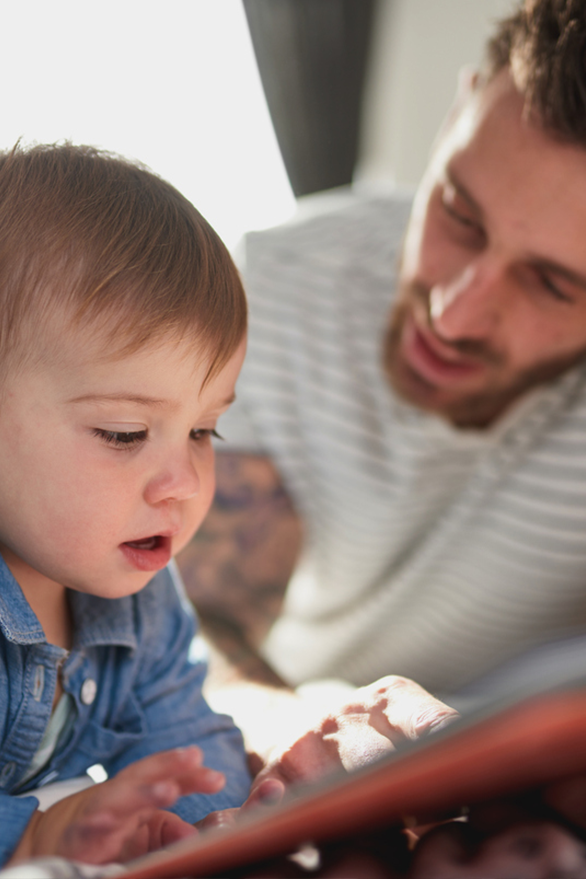
Caregivers who talk with children throughout the day, read books aloud, name everyday objects, and engage in simple back-and-forth exchanges provide the foundation for strong language skills. These rich interactions are strongly associated with faster vocabulary growth and more advanced conversational abilities (Gosh, 2015; Mayo Clinic, 2025).
Influential Factors in Language Development
A child’s language development is shaped by a combination of internal and external influences:
Internal Factors
• Overall health and neurological development
• Hearing ability and speech sound production
• Individual differences in temperament and developmental pace
External Factors
• A language-rich home and cultural environment
• Consistent exposure to songs, stories, and conversation
• Socioeconomic conditions and caregiver education
• Access to books and developmentally appropriate interactions
Children who grow up in environments filled with meaningful, varied language input tend to progress more rapidly in vocabulary and oral communication (Nation & Snowling, 2018).
Research Connections: Oral Language and Later Literacy
Longitudinal studies underscore the profound connection between early oral language and later reading achievement. Strong oral language skills in toddlerhood predict later word reading, comprehension, and overall literacy success (Nation & Snowling, 2018). In particular, vocabulary acquisition and conversational skills between ages 2 and 3 serve as early stepping stones for decoding, deeper comprehension, and academic performance throughout the school years.
Supporting Oral Language Development
Caregivers and educators play a central role in supporting early language growth. Effective practices include:
- Talking throughout daily routines—mealtime, baths, car rides, and playtime.
- Reading aloud every day and encouraging children to point to pictures, imitate sounds, and answer simple questions.
- Responding warmly to children’s attempts at communication and expanding on what they say.
- Singing, rhyming, and playing word games to build vocabulary and sound awareness.
- Narrating experiences to expose children to new words and ideas (Gosh, 2015; Mayo Clinic, 2025).
These simple, consistent interactions accumulate over time, forming the strong oral language base that supports future literacy.
References
Gosh, N. (2015, December 31). Speech and language development from birth to 12 months. Great Ormond Street Hospital. https://www.gosh.nhs.uk/conditions-and-treatments/procedures-and-treatments/speech-and-language-development-birth-12-months/
Mayo Clinic. (2025, February 18). Language development: Speech milestones for babies. https://www.mayoclinic.org/healthy-lifestyle/infant-and-toddler-health/in-depth/language-development/art-20045163
Nation, K., & Snowling, M. J. (2018, January 17). The role of early oral language abilities and family risk in predicting later difficulties in reading comprehension. Frontiers in Psychology, 9, 1–13. https://pmc.ncbi.nlm.nih.gov/articles/PMC5862320